

Your home's air can look clean and still work against you. Poor indoor air quality rarely announces itself. It shows up as dust that returns two days after you clean, a musty smell in one room, or sneezing that stops the moment you step outside. In Southern California, the signs build fast: homes run the AC most of the year, ductwork sits in hot attics, and smog, wildfire smoke, and desert dust all find their way inside. Here are seven signs your indoor air quality needs attention, what each one means, and what to do about it.
The 7 Signs at a Glance
Dust returns within days of cleaning.
Musty or stale odors that cleaning does not remove.
Symptoms that ease when you leave the house.
Dirty filters and dark streaks around vents.
Humidity that feels wrong, too damp or too dry.
Stuffy rooms and uneven airflow from vent to vent.
Air that stays off after smoke or smog days.
1. Dust Returns Within Days
Every home collects dust, but a film on shelves and TV screens a day or two after wiping means your air carries more particles than your system removes. The usual causes are a clogged or low-grade filter, leaks in the ductwork that pull in attic dust, or a filter too thin for the airflow your system moves. Start with the filter. A gray, packed filter needs replacing, and a higher MERV rating captures more fine particles, as long as your system is built to handle it. If dust keeps returning with a fresh filter, have the ducts inspected for leaks.
2. Musty or Stale Odors That Cleaning Does Not Remove
An odor that survives a deep clean has a source you have not found. A musty smell when the system starts up points to moisture in the ductwork, the drain pan, or the coil, and moisture is what mold needs. Air fresheners hide the smell and leave the source in place. Track when the odor appears and which rooms carry it, then have a technician trace it. If the smell shows up the moment the AC kicks on, read our guide to mold in air ducts.
3. Symptoms That Ease When You Leave the House
The pattern is the tell. Sneezing, congestion, itchy eyes, a scratchy throat, or headaches that build at home and fade away from it point to something in your indoor air: dust mites, pet dander, mold spores, tracked-in pollen, or vapors from cleaning products. Many of these symptoms have other causes, so keep a simple log of when they hit, such as mornings after a night in the bedroom or after the system runs. Share that log with your doctor, especially if anyone in your home has asthma or allergies.
4. Dirty Filters and Dark Streaks Around Vents
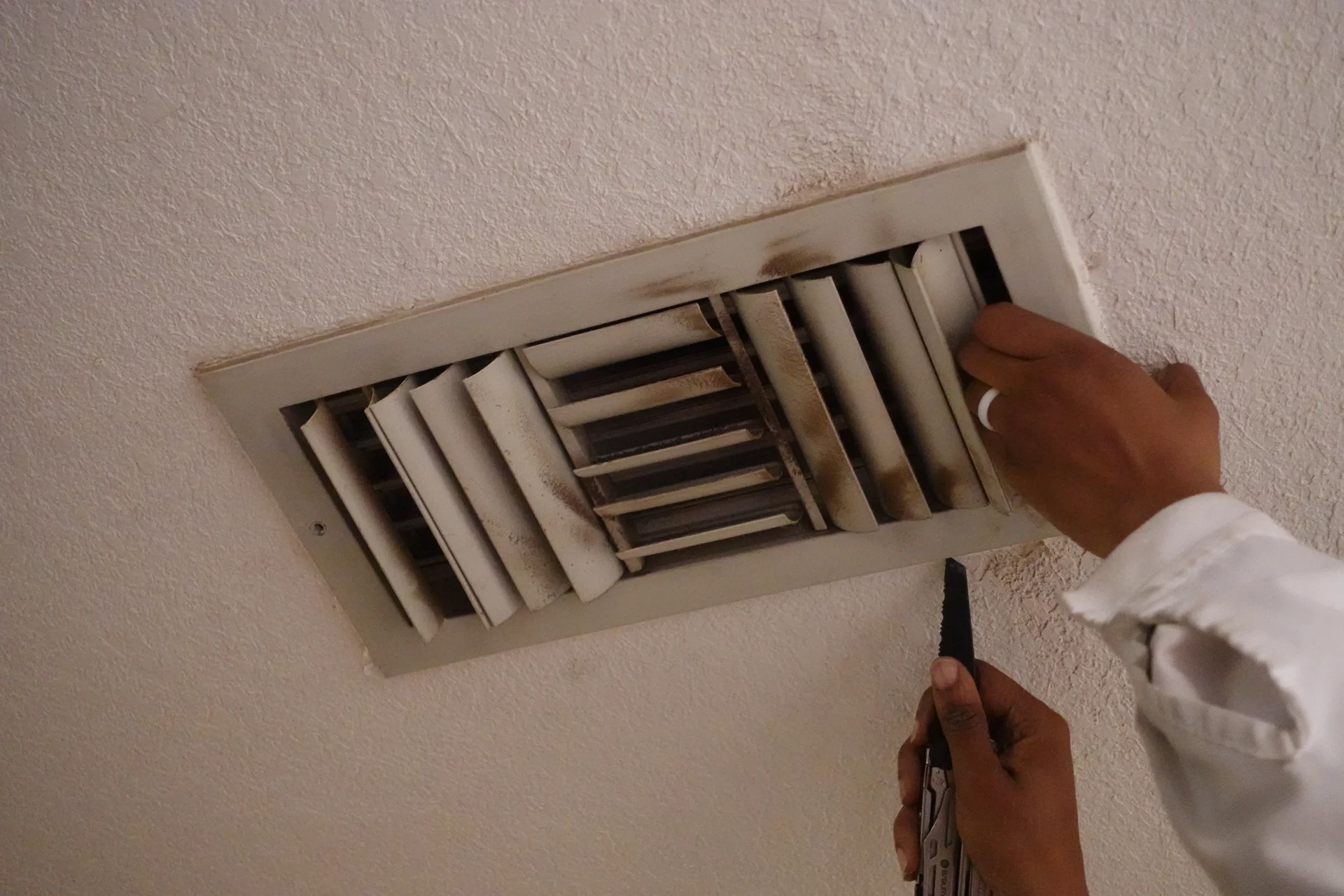
A filter that turns gray in a few weeks instead of a few months is working harder than it should, or the air entering it carries more debris than normal. Dark streaks around supply vents are another visible sign: that residue is dust, soot, or buildup that your ductwork is pushing into the room. Southern California's long cooling season means your system, and your filter, work most of the year. Check the filter monthly during summer and replace it when it looks packed. If the streaks return after you wipe them, schedule a duct inspection.
5. Humidity That Feels Wrong
The EPA recommends keeping indoor humidity between 30 and 50 percent. Above that range, you see condensation on windows, a damp feel, and mold spots in corners and bathrooms, and dust mites thrive. Below it, you get static shocks, dry skin, a scratchy throat, and cracking wood. Southern California pulls in both directions: coastal homes deal with the marine layer's moisture, while inland and desert homes deal with dry heat. A hygrometer, a small and inexpensive gauge, gives you the exact reading. If your numbers sit outside the range, humidity control belongs in your air quality plan.
6. Stuffy Rooms and Uneven Airflow
If one bedroom feels stale or hot while the rest of the house is comfortable, or one vent blows weakly while another blasts, your air is not circulating evenly. Leaky, crushed, or disconnected ducts, blocked returns, and an undersized system all cause it. Rooms with weak airflow hold stale air and pollutants longer, and leaky ducts in a hot attic waste cooled air and pull attic dust into your airstream. Sealing the ducts restores airflow and keeps attic air out of your home.
7. The Air Still Feels Off After Smoke or Smog Days
After a wildfire smoke event or a long stretch of smog, your indoor air should recover within a day or so. If the haze, smoke smell, or scratchy throat lingers, outdoor pollution got in through leaks and your filter is not capturing it. The American Lung Association's 2026 State of the Air report ranks the Los Angeles area as the most ozone-polluted region in the country, and Riverside County also ranks in the national top ten for fine particle pollution. Filters capture the fine particles that travel with smoke and smog, but they do not remove ozone gas. On bad air days, keep windows closed, run your system's fan on circulate, and check the outdoor air quality index before you open up. For a full prep plan, read our guide to how wildfire season affects indoor air quality.
Quick Fixes You Can Try Today
Replace the filter if it looks gray or packed, and mark your calendar for the next change.
Set the fan to circulate so your filter cleans the air even when the AC or heat is off.
Check humidity with a hygrometer and aim for 30 to 50 percent.
Wipe vent covers and vacuum around returns to cut down on visible buildup.
Swap scented products for fragrance-free cleaners and skip candles and sprays near the vents.
When to Call a Professional
Call when you see two or more of these signs, when symptoms track with time spent at home, or when an odor returns after you have cleaned. A NEXGEN technician inspects your ductwork and filtration, checks for moisture and airflow problems, and recommends a specific fix, whether that is duct sealing, duct cleaning, a filtration upgrade, or a whole-home air purifier. If you want numbers before you decide, read our guide to testing your home's indoor air quality.
Frequently Asked Questions
How do I know if my indoor air quality is bad?
Look for the signs above: dust that returns fast, persistent odors, symptoms that ease when you leave home, dirty filters, humidity outside the 30 to 50 percent range, uneven airflow, and air that stays off after smoke or smog days. Two or more signs justify a professional inspection.
Can indoor air be worse than outdoor air?
Yes. According to the EPA, indoor air can hold higher concentrations of some pollutants than outdoor air. Dust, pet dander, mold spores, and chemical vapors build up in sealed homes.
Should I open windows to improve indoor air quality?
On clear days with good outdoor air, a short burst of fresh air helps. On smoke or smog days, keep windows closed and run your system's fan. Check the outdoor air quality index first.
Recognize two or more of these signs? Schedule an indoor air quality visit with NEXGEN and find out what is in your home's air.