

Finding the best air purifier for allergies and smoke starts with one question: do you need to clean one room or the whole house? Portable units and whole-home systems both capture the airborne particles behind sneezing, congestion, and irritated lungs, including pollen, dust, pet dander, and wildfire smoke, but they work differently and suit different households. In Southern California, the choice carries extra weight. Homes here deal with year-round allergens, seasonal wildfire smoke, and some of the worst smog in the country, according to the American Lung Association's 2026 State of the Air report. This guide explains how each type works, what Southern California homes need to consider, and how to pick the right fit for your family.
Whole-Home vs. Portable at a Glance
A portable air purifier cleans the room it sits in. A whole-home air purifier connects to your HVAC system and cleans the air in every room the ducts serve. The infographic below puts the two side by side, with a quick guide to Southern California conditions.
Whole-home vs. portable air purifiers
A portable unit cleans the room it sits in. A whole-home system cleans every room your HVAC system serves.
Portable
One room cleaned. The rest of the house stays as it was.
Whole-home
Every room on the system cleaned, with nothing to move or plug in.
How they compare
| What matters | Portable | Whole-home |
|---|---|---|
| Coverage | One room, sized to the unit | Every room the ductwork serves |
| Setup | Plug in and place | Professional installation in the HVAC system |
| Noise | Fan noise in the room | Runs with your existing blower |
| Upkeep | Filter changes for each unit | One system, serviced with your HVAC maintenance |
| Upfront cost | Lower | Higher |
| Best for | Renters and single problem rooms | Homeowners, asthma, pets, and whole-family relief |
Southern California quick guide
- Inland Empire and LA Basin Smog and fine particles from traffic and freight. Filters capture the particles, not the ozone gas. Whole-home leads
- Wildfire and Santa Ana wind season Smoke is fine particles that slip in through duct leaks. Seal the ducts, upgrade the filter, and set up a clean room. Use both
- Coast and marine layer Humid air feeds mold and dust mites. Pair either option with humidity control. Either, plus humidity control
- Desert and Coachella Valley The AC runs most of the year and blowing dust loads filters fast. Check filters more often. Whole-home leads
California rule: every air cleaner sold in the state must be CARB certified for low ozone. Look for the "CARB certified" label and skip ozone generators.
Sources: California Air Resources Board; American Lung Association, State of the Air 2026. Brought to you by NEXGEN.
How Whole-Home Air Purifiers Work
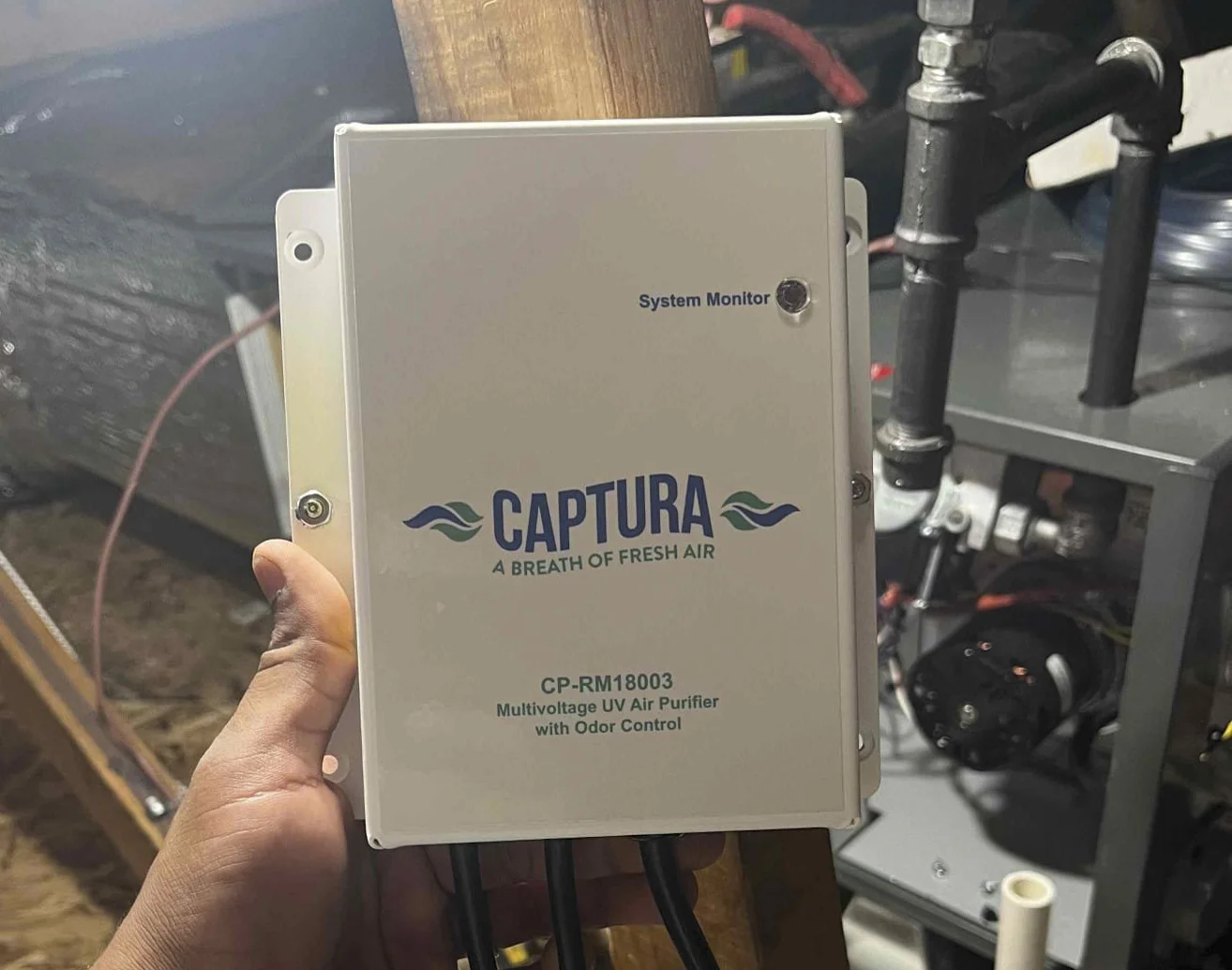
A whole-home air purifier installs in your ductwork or air handler, so the air your HVAC system circulates gets cleaned on every pass. Whole-home systems use high-efficiency media filters, electronic air cleaners, UV light, or a dedicated HEPA bypass. Standard HVAC systems cannot push air through a true HEPA filter without losing airflow, which is why a whole-home HEPA setup runs through its own bypass duct. The system cleans air only while your blower runs, so set the fan to circulate instead of running only when the AC or heat calls. The payoff is steady coverage in every room, with no units to move, plug in, or maintain one by one.
How Portable Air Purifiers Work
A portable air purifier pulls room air through a filter and releases it clean. Look for a true HEPA filter, which captures 99.97 percent of particles at 0.3 microns, including pollen, pet dander, dust, and smoke particles. Match the unit's CADR rating to the size of the room, and keep the door closed so the unit works on one space. Portable units excel in a bedroom, a nursery, or a home office, and they cost less up front. The limit is coverage: each unit cleans one room, and every unit needs its own outlet, its own filter schedule, and its own fan noise.
What Southern California Homes Need to Consider
Air in Southern California changes from neighborhood to neighborhood, and so does the best purifier setup.
Inland Empire and the LA Basin
The 2026 State of the Air report ranks San Bernardino County first and Riverside County second in the nation for ozone, with Los Angeles County third. Riverside County also lands in the national top ten for fine particle pollution. Ozone is a gas, and HEPA and standard media filters do not remove it. What those filters capture is the fine particle pollution from traffic, freight, and combustion. For homes in Riverside, Ontario, and Fontana, a whole-home system with a high-efficiency filter keeps that particle load down in every room, around the clock.
Wildfire and Santa Ana Wind Season
Smoke is made of fine particles, and it enters through door gaps, window seals, and leaky ductwork. A whole-home system with sealed ducts and a high-efficiency filter protects the full house during a smoke event. A portable HEPA unit in one bedroom gives your family a clean room to retreat to when air quality drops. Running both gives the strongest protection. For more on preparing your home, read our guide to how wildfire season affects indoor air quality.
Coast and the Marine Layer
Coastal humidity and the marine layer keep moisture in the air, and moisture feeds mold and dust mites. A purifier captures airborne spores, but it does not remove the moisture that grows them. Pair either option with humidity control and dry, well-sealed ductwork.
Desert Communities and the Coachella Valley
In Palm Desert and the surrounding desert communities, the AC runs most of the year and wind-blown dust loads filters quickly. A whole-home system keeps pace with an HVAC system that rarely rests. Check and replace filters more often than you would in a milder climate.
Older Ducts and Hot Attics
Many Southern California homes run ductwork through hot attics. Leaks in those ducts pull attic dust into the airstream before it reaches any purifier. Seal the ducts first, and a whole-home system performs the way it is designed to.
Best Air Purifier for Allergies: What to Look For
The right features depend on the type you choose.
Portable unit: a true HEPA filter, a CADR rating matched to your room size, and a quiet setting for bedrooms. Activated carbon adds odor and gas reduction that a particle filter alone does not provide.
Whole-home system: a high-efficiency filter or HEPA bypass, sealed ductwork, and a fan setting that circulates air.
Any unit sold in California: CARB certification. Since 2010, California has required indoor air cleaners to meet an ozone emission limit of 0.050 parts per million. Ozone generators sold as air purifiers are a health hazard, and CARB publishes a list of certified devices so you can check before you buy.
Which One Is Right for Your Family?
Choose a portable purifier if you rent, if the problem sits in one room, or if you want relief tonight at a lower cost. Choose a whole-home system if you own your home, if allergies or asthma affect more than one person, if pets or smoke season load the whole house, or if you want clean air without managing several machines. Choose both if someone has severe asthma or if wildfire smoke is your main concern: the whole-home system covers the house, and a portable unit in the bedroom adds a second layer.
When to Call a Professional
If allergy symptoms are worse indoors than outdoors, dust returns within days of cleaning, or your ductwork has not been inspected in years, call before you buy. A NEXGEN technician checks your ducts for leaks, confirms your HVAC system can handle added filtration, and recommends the right option for your home and neighborhood. A purifier works best when the ductwork and HVAC system behind it are sound.
Frequently Asked Questions
Is a whole-home air purifier better than a portable one?
Whole-home wins on coverage and convenience. Portable wins on upfront cost and flexibility. The better choice depends on whether your problem sits in one room or the whole house.
Do air purifiers remove smog?
Particle filters capture the fine particles that travel with smog and wildfire smoke. They do not remove ozone gas. On high-ozone days, keep windows closed and run your system's fan.
Can I run a whole-home air purifier all year?
Yes. The system cleans air whenever the blower runs, so set the fan to circulate and change filters on schedule.
What size portable purifier do I need?
Choose a unit rated for at least the square footage of your room, and size up for high ceilings.
Ready to find the right air purifier for your home? Schedule an indoor air quality consultation with NEXGEN today and breathe easier in every room.